

Cybersecurity incidents don’t usually happen because systems fail. They happen because people make small, everyday mistakes.
An employee clicks a fake email.
Someone uses the same password everywhere.
A file is downloaded without thinking twice.
That’s why simple cybersecurity training for employees is one of the most powerful ways to reduce cyber risk.
This guide is designed for all employees, not just IT teams. You don’t need technical knowledge, complex tools, or long manuals. Think of cybersecurity like workplace safety training, small habits that prevent big accidents.
Let’s walk through a clear, step-by-step approach to cybersecurity training that actually works.
1. What Is Employee Cybersecurity Training
Employee cybersecurity training teaches staff how to:
- Recognize cyber threats
- Avoid risky actions
- Protect company and customer data
- Respond correctly to incidents
It focuses on behavior, not technology.
2. Why Simple Cybersecurity Training Works Best
Overly technical training often fails because:
- Employees feel overwhelmed
- Lessons are forgotten quickly
- People disengage
Simple training works because it:
- Uses real-life examples
- Focuses on everyday actions
- Builds confidence
- Encourages participation
Cybersecurity should feel approachable, not scary.
3. Step 1: Build Basic Cyber Awareness
The first step is awareness.
Employees should understand:
- Cyber attacks are common
- Everyone is a potential target
- Small actions matter
Awareness is like turning on the lights, you can’t avoid dangers you can’t see.
4. Step 2: Understanding Common Cyber Threats
Employees don’t need to know every threat, just the most common ones:
- Phishing emails
- Malware
- Ransomware
- Social engineering
- Unsafe downloads
Training should explain these threats in plain language.
5. Step 3: Email Safety Training
Email is the #1 entry point for cyber attacks.
Employees should learn to:
- Check sender details
- Be cautious with attachments
- Avoid clicking unknown links
- Question urgent or emotional messages
One safe email habit can prevent a major breach.
6. Step 4: Phishing Awareness Made Simple
Phishing is when attackers pretend to be someone trusted.
Examples:
- Fake HR emails
- Fake invoices
- Password reset messages
A good rule: If it feels urgent, stop and verify.
7. Step 5: Password Safety Step by Step
Password training should be practical:
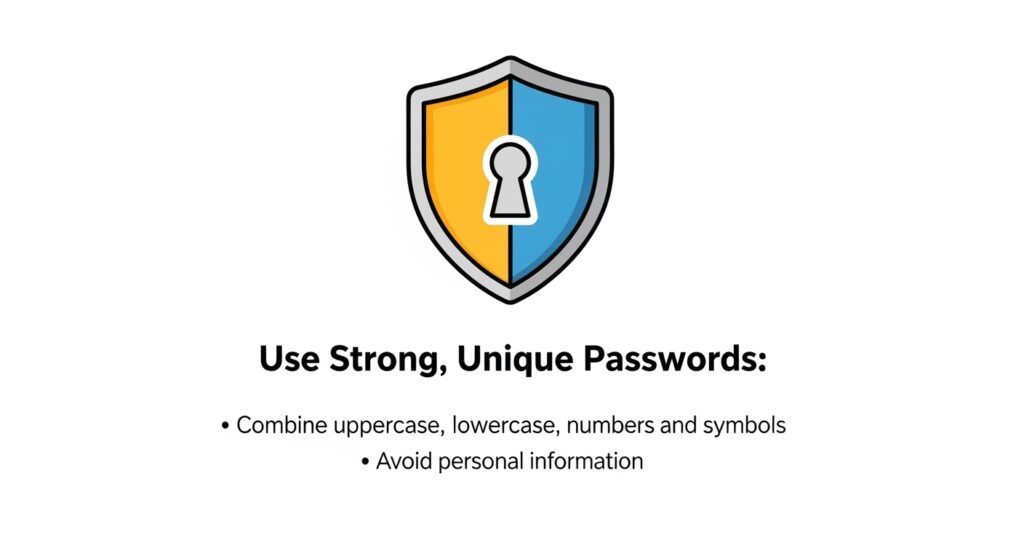
- Use long passwords
- Don’t reuse passwords
- Avoid personal information
- Use password managers if allowed
Passwords are like keys, don’t use the same one everywhere.
8. Step 6: Safe Internet and Browsing Habits
Employees should understand:
- Why unsafe websites are dangerous
- Why free downloads can hide malware
- Why pop-ups should be avoided
Safe browsing protects both personal and company systems.
Explore our latest topic on Cybersecurity Course for Non-Technical Staff: Simple & Effective
9. Step 7: Device and Workspace Security
Cybersecurity isn’t just online.
Employees should learn:
- Locking screens when away
- Protecting laptops and phones
- Avoiding unknown USB drives
- Keeping devices updated
Physical and digital security go hand in hand.
10. Step 8: Remote Work Cybersecurity Basics
Remote work introduces new risks:
- Public Wi-Fi
- Shared home devices
- Personal networks
Training should explain:
- Safe Wi-Fi use
- VPN basics (without technical depth)
- Separating work and personal activities
11. Step 9: Data Protection for Employees
Employees often handle sensitive data without realizing it.
Training should cover:
- What counts as sensitive data
- Why data protection matters
- How leaks happen
- Simple data handling rules
Protecting data protects trust.
12. Step 10: Ransomware Awareness Training
Ransomware can shut down entire organizations.
Employees should know:
- How ransomware spreads
- Why clicking links is risky
- Why early reporting matters
According to guidance from the Cybersecurity & Infrastructure Security Agency (CISA), employee awareness is a key defense against ransomware.
13. Step 11: Reporting Suspicious Activity
Employees should never fear reporting mistakes.
Training must encourage:
- Reporting suspicious emails
- Asking questions
- Speaking up early
Fast reporting reduces damage and recovery time.
14. Step 12: Reducing Human Error
Human error is normal, but manageable.
Training helps employees:
- Slow down
- Think before clicking
- Follow simple security steps
Cybersecurity improves when habits improve.
15. Step 13: Creating a Cybersecurity Routine
Cybersecurity works best when it becomes routine:
- Checking emails carefully
- Updating passwords
- Locking screens
- Reporting issues
Small daily habits create long-term protection.
16. Step 14: Tools vs Behavior in Cybersecurity
Security tools are important, but tools alone don’t stop attacks.
Behavior-based training:
- Reduces mistakes
- Improves decision-making
- Strengthens defenses
People are the strongest security layer when trained well.
17. Step 15: How Safelora Simplifies Employee Training
Safelora focuses on simple, step-by-step cybersecurity training designed for employees at all levels.
Safelora’s approach includes:
- Beginner-friendly content
- Practical real-world examples
- Short learning modules
- Easy-to-follow guidance
This makes cybersecurity training effective without being overwhelming.
18. Step 16: Measuring Training Effectiveness
Good training shows results through:
- Reduced phishing clicks
- Faster incident reporting
- Increased employee confidence
- Fewer security incidents
Simple metrics help improve training over time.
19. Step 17: Building a Cyber-Safe Company Culture
Cybersecurity becomes stronger when:
- Employees feel responsible
- Leadership supports training
- Security is discussed openly
- Learning is continuous
A cyber-safe culture starts with awareness.
20. Step 18: The Future of Employee Cybersecurity Training
As threats evolve:
- Training will become more frequent
- Microlearning will grow
- Awareness will be ongoing
Organizations that invest in employee training stay ahead of cyber risks.
Conclusion
Simple cybersecurity training for employees doesn’t require complex tools or technical knowledge. It requires clear guidance, practical steps, and consistent reinforcement.
When employees understand risks and know how to respond, cyber threats lose their power. Step-by-step training turns everyday actions into strong defenses, and builds a safer organization for everyone.
Cybersecurity starts with people. Train them simply. Train them well.
Frequently Asked Questions (FAQs)
1. Why is cybersecurity training important for all employees?
Because most cyber incidents start with human actions, not system failures.
2. Does employee cybersecurity training need technical content?
No. Simple, behavior-focused training is more effective.
3. How often should employees receive cybersecurity training?
Regular short sessions work better than one-time training.
4. Can simple training really reduce cyber risks?
Yes. Awareness and good habits prevent many attacks.
5. Is online cybersecurity training effective for employees?
Yes. Online training is flexible, scalable, and easy to update.