

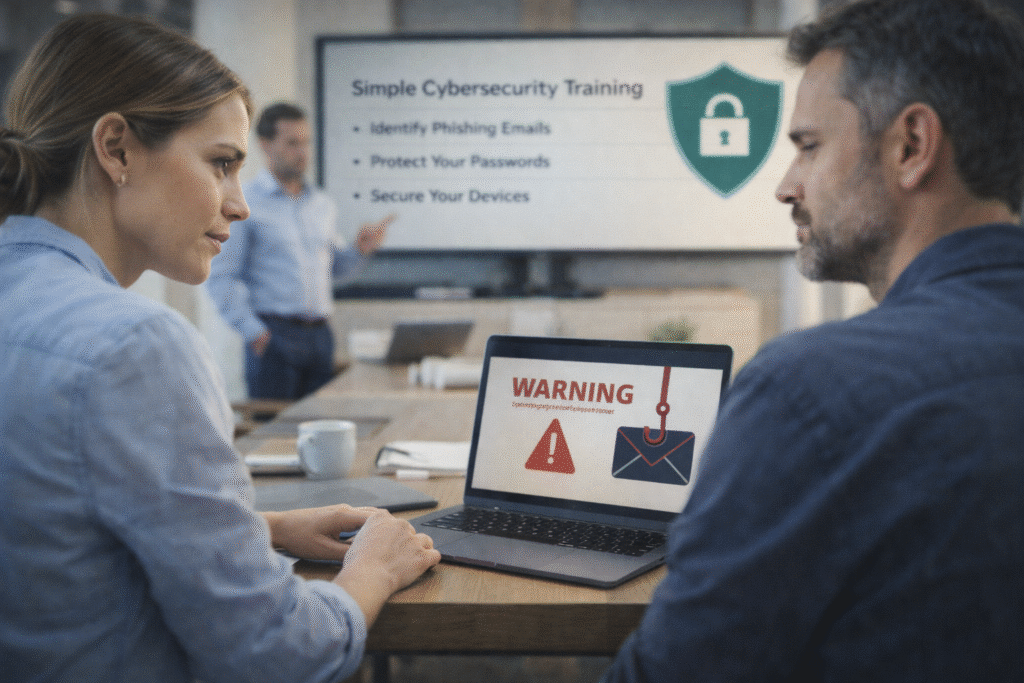
Cybersecurity training often fails not because it is unimportant, but because it is too complex, too technical, or disconnected from real employee behavior. In reality, the most effective cybersecurity training is simple, practical, and easy to remember. When employees understand what to look for and what actions to take, they become one of the strongest defenses against cyber threats.
This article explains why simple cybersecurity training works, what employees need to learn, and how organizations can build a security-aware workforce without overwhelming staff.
Why Employee Cybersecurity Training Is Essential
Employees interact with digital systems every day. They open emails, access company tools, download files, and handle sensitive data. These everyday actions make employees a frequent target for cybercriminals.
Most cyber incidents occur due to:
- Phishing emails
- Weak or reused passwords
- Accidental data sharing
- Unsafe browsing habits
- Lack of cybersecurity awareness
Simple training helps employees recognize threats early and respond correctly, reducing risk significantly.
Why “Simple” Training Is More Effective Than Complex Training
Complex technical training often leads to:
- Confusion
- Low engagement
- Poor retention
- Inconsistent application
Simple cybersecurity training focuses on what employees need to know and do, not technical theory. When training is easy to understand, employees are more likely to remember and apply it.
Key principles of effective simple training:
- Clear language
- Real-life examples
- Short lessons
- Actionable steps
Core Cybersecurity Topics Every Employee Must Know
Simple training focuses on a few high-impact areas that prevent most cyber incidents.
1. Phishing Awareness and Email Security
Phishing is the leading cause of data breaches. Employees must learn:
- How to identify suspicious emails
- Warning signs such as urgency, unknown senders, and unusual links
- How to verify requests safely
- What to do if they click a malicious link
Employees should understand that it’s okay to stop and check before acting.
2. Password Security Best Practices
Simple password training includes:
- Creating strong, unique passwords
- Avoiding password reuse
- Using password managers
- Enabling multi-factor authentication (MFA)
Strong passwords alone can prevent many attacks.
3. Safe Internet and Website Usage
Employees should learn:
- How to recognize secure websites
- Risks of fake login pages
- Safe file downloading practices
- How malicious ads work
These lessons help prevent malware infections and credential theft.
4. Device and Workspace Security
Simple training covers:
- Locking devices when unattended
- Keeping software updated
- Protecting laptops and mobile devices
- Safe remote work practices
Security doesn’t stop at the office—it travels with the employee.
5. Handling Sensitive Data Carefully
Employees must understand:
- What data is considered sensitive
- How to store and share information securely
- How accidental data leaks happen
- Following company data protection policies
This reduces both internal and external data risks.
6. Reporting Suspicious Activity
Simple training encourages:
- Reporting suspicious emails or activity
- Asking questions without fear
- Acting quickly when something feels wrong
Early reporting can stop an attack before it spreads.
Training Methods That Actually Work
Simple cybersecurity training is most effective when it uses engaging methods.
Short Learning Modules
5–10 minute lessons are easier to absorb and remember.
Real-Life Scenarios
Examples employees recognize from daily work improve relevance.
Interactive Quizzes
Quick quizzes reinforce learning and highlight gaps.
Visual Aids
Videos, diagrams, and checklists improve understanding.
How to Make Cybersecurity Training Part of Company Culture
Training works best when it’s ongoing, not one-time.
1. Regular Refreshers
Short refresher sessions keep knowledge up to date.
2. Positive Reinforcement
Recognize employees who follow security best practices.
3. Open Communication
Encourage employees to report concerns without blame.
4. Leadership Support
When leadership supports cybersecurity, employees take it seriously.
Measuring the Effectiveness of Training
Organizations should track:
- Quiz and assessment results
- Number of reported phishing attempts
- Reduction in security incidents
- Employee feedback
Simple metrics help improve training over time.
Benefits of Simple Cybersecurity Training
Organizations that implement simple training experience:
- Fewer successful cyber attacks
- Reduced human error
- Increased employee confidence
- Stronger overall security posture
Employees feel empowered, not overwhelmed.
Why Online Cybersecurity Training Works Best
Online training platforms offer:
- Flexible learning schedules
- Consistent training content
- Easy updates as threats evolve
- Scalable solutions for growing teams
At Safelora.com, employee cybersecurity training is designed to be simple, practical, and effective.
Final Thoughts
Cybersecurity doesn’t need to be complicated to be effective. Simple cybersecurity training for employees focuses on awareness, common sense, and practical actions that prevent real-world attacks.
When employees understand the risks and know how to respond, they become a powerful defense against cyber threats.
To build a cyber-aware workforce that actually works, explore employee cybersecurity training at:
FAQs
Simple cybersecurity training focuses on practical, easy-to-understand security habits for employees.
Employees remember and apply simple lessons better than complex technical training.
Phishing awareness, password security, safe browsing, device security, and data handling.
Through quizzes, phishing simulations, incident reports, and employee feedback.
Yes, most data breaches are caused by human error, which simple training helps prevent.