

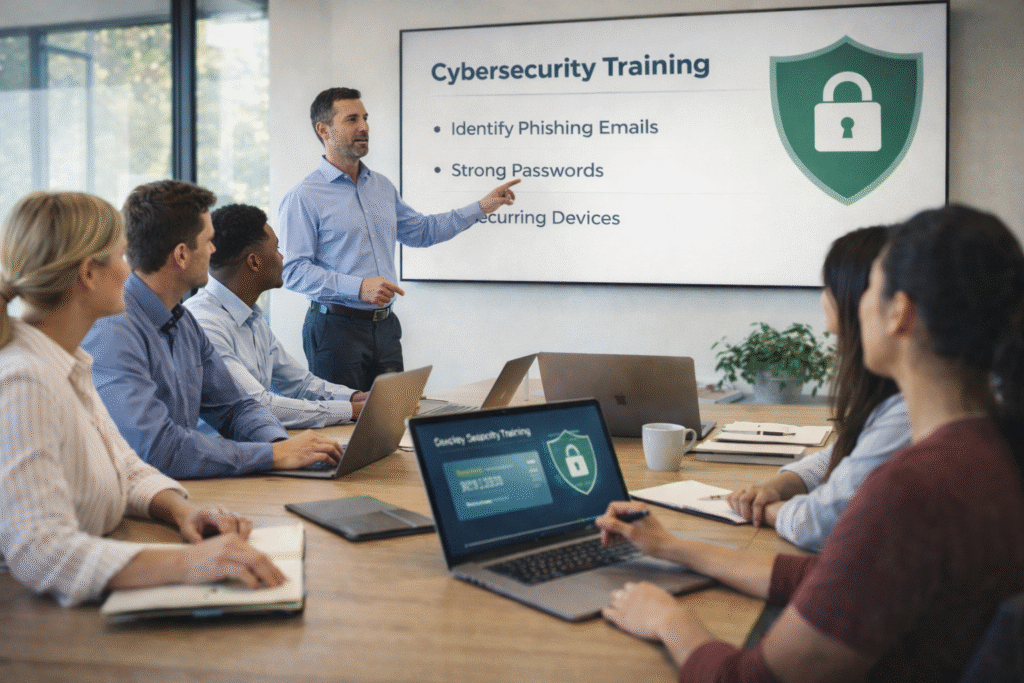
Cybersecurity is often misunderstood as a technical issue handled only by IT teams. In reality, non-technical staff are one of the most important lines of defense against cyber threats. Many cyber attacks succeed not because of system failures, but because of human error. That’s why a cybersecurity course for non-technical staff is critical for every modern organization.
This article explains why non-technical employees are targeted, what a cybersecurity course for them includes, and how such training significantly reduces security risks.
Why Non-Technical Staff Are a Major Cybersecurity Target
Cybercriminals don’t always attack systems—they attack people. Non-technical staff often handle emails, files, customer data, and internal systems daily, making them attractive targets.
Common reasons attackers target non-technical staff include:
- Limited cybersecurity awareness
- Trust-based job roles
- Frequent email communication
- Access to sensitive information
Attackers know that a single click on a malicious link can open the door to a serious security incident.
What Is a Cybersecurity Course for Non-Technical Staff?
A cybersecurity course for non-technical staff is designed to teach practical security awareness without technical complexity. It focuses on everyday actions employees take and how those actions can either prevent or cause security incidents.
Key characteristics include:
- Simple, non-technical language
- Real-life workplace examples
- Clear do’s and don’ts
- Actionable guidance
The goal is awareness—not advanced technical skills.
What Does This Type of Cybersecurity Course Cover?
A well-designed course focuses on the most common threats employees encounter in daily work.
1. Phishing and Email Security Awareness
Email is the most common entry point for cyber attacks. Training teaches employees:
- How to identify phishing emails
- Common warning signs (urgent tone, unknown senders, fake links)
- How to verify suspicious messages
- What to do if they click a malicious link
Employees learn that thinking before clicking is one of the strongest defenses.
2. Password Security Best Practices
Non-technical staff often reuse passwords across multiple platforms, increasing risk.
Training covers:
- Creating strong, unique passwords
- Avoiding password reuse
- Using password managers safely
- Understanding multi-factor authentication (MFA)
These simple practices dramatically reduce account compromise.
3. Safe Internet and Website Usage
Employees frequently browse websites and use online tools at work. Training teaches:
- How to identify secure websites
- Avoiding fake login pages
- Safe file downloading practices
- Risks of pop-ups and malicious ads
This helps prevent malware infections and credential theft.
4. Handling Sensitive Data Securely
Non-technical staff often handle customer and business data.
Courses explain:
- What qualifies as sensitive data
- How to store and share data safely
- Avoiding accidental data leaks
- Following company data policies
This reduces data breaches caused by simple mistakes.
5. Social Engineering Awareness
Social engineering attacks manipulate human trust rather than systems.
Training includes:
- Phone scams
- Fake support calls
- Impersonation attacks
- Urgent requests from “managers” or “vendors”
Employees learn how to verify requests before acting.
6. Device and Workspace Security
Courses also cover:
- Locking devices when unattended
- Securing laptops and mobile phones
- Avoiding unauthorized USB devices
- Safe remote work practices
Physical and digital security go hand in hand.
How Cybersecurity Training Helps Non-Technical Employees
Cybersecurity training empowers employees by:
- Increasing confidence
- Reducing fear of making mistakes
- Improving decision-making
- Encouraging reporting of suspicious activity
When employees understand cybersecurity, they become proactive instead of reactive.
Benefits for Organizations
Organizations that train non-technical staff experience measurable benefits.
1. Reduced Human Error
Most breaches involve human mistakes. Training significantly lowers this risk.
2. Faster Threat Detection
Employees spot suspicious activity earlier and report it.
3. Stronger Security Culture
Cybersecurity becomes a shared responsibility.
4. Improved Compliance
Training supports compliance with data protection regulations.
Why Simple Training Works Better Than Technical Training
Non-technical staff do not need complex technical explanations. Effective training:
- Uses simple language
- Focuses on real scenarios
- Avoids overwhelming detail
- Encourages common sense actions
Simple training is easier to remember and apply.
Best Practices for Implementing Training
To make training effective:
- Conduct regular refresher sessions
- Use short, engaging modules
- Encourage questions and discussion
- Avoid blaming employees for mistakes
- Update training as threats evolve
Consistency is key to long-term success.
Why Online Cybersecurity Courses Are Ideal for Non-Technical Staff
Online training platforms allow:
- Flexible learning schedules
- Self-paced progress
- Easy updates to content
- Scalable training across teams
At Safelora.com, cybersecurity courses are designed to be clear, practical, and accessible for non-technical users.
Final Thoughts
Cybersecurity is no longer just an IT responsibility. A cybersecurity course for non-technical staff equips employees with the awareness and confidence needed to protect themselves and their organizations.
By focusing on real-world threats, simple actions, and clear guidance, organizations can significantly reduce security risks caused by human error.
To empower your non-technical team with effective cybersecurity training, visit:
FAQs
Non-technical staff are frequently targeted by phishing and social engineering attacks.
No, these courses use simple language and real-world examples without technical complexity.
Phishing awareness, password safety, data protection, safe browsing, and reporting threats.
It reduces human error, improves awareness, and helps detect threats early.
At least once a year, with short refresher sessions throughout the year.