

If you’re new to cybersecurity, the first question is usually simple: Where do I start without feeling overwhelmed? The internet is full of blogs, courses, and tutorials, but not all of them are beginner-friendly. Some feel too technical, others are outdated, and many require live sessions that don’t fit into a busy schedule.
That’s where pre-recorded cybersecurity training videos for beginners come in. They let you learn at your own pace, rewind confusing parts, and build skills step by step, without pressure.
Think of pre-recorded training like a gym with 24/7 access. You don’t need a trainer watching every move. You go when you’re ready, practice at your speed, and repeat until you feel confident. For beginners, this flexibility can make the difference between giving up and actually mastering cybersecurity basics.
In this guide, we’ll explore what makes a cybersecurity video course truly beginner-friendly, how to choose the right one, and why pre-recorded learning is often the smartest first step.
1. Why Cybersecurity Learning Feels Hard for Beginners
Cybersecurity often sounds intimidating because it comes with:
- Technical terms
- Complex tools
- Real-world consequences
Beginners may feel like everyone else already knows more. But here’s the truth: everyone starts as a beginner.
The problem isn’t cybersecurity, it’s how it’s often taught. Long lectures, heavy theory, and no practical context can discourage learners early on.
That’s why the format of learning matters just as much as the content.
2. What Are Pre-Recorded Cybersecurity Training Videos
Pre-recorded cybersecurity training videos are structured lessons recorded in advance. You can watch them anytime, anywhere, without joining live sessions.
These videos typically include:
- Short lessons
- Visual demonstrations
- Step-by-step explanations
- Real-world examples
For beginners, this format removes pressure and allows repeated learning.
3. Benefits of Pre-Recorded Cybersecurity Training
Why do so many beginners prefer pre-recorded training? Because it solves common learning challenges.
Key benefits include:
- Learn anytime, anywhere
- Pause and rewind complex topics
- No fixed schedule
- Ideal for self-paced learners
- Often more affordable
Instead of rushing through topics, you build confidence gradually.
4. Who Should Choose Pre-Recorded Cybersecurity Courses
Pre-recorded cybersecurity training videos are perfect for:
- Students exploring cybersecurity
- Working professionals switching careers
- Developers wanting security basics
- Startup founders protecting digital assets
- Non-technical learners curious about online safety
If flexibility matters to you, this learning style is a strong fit.
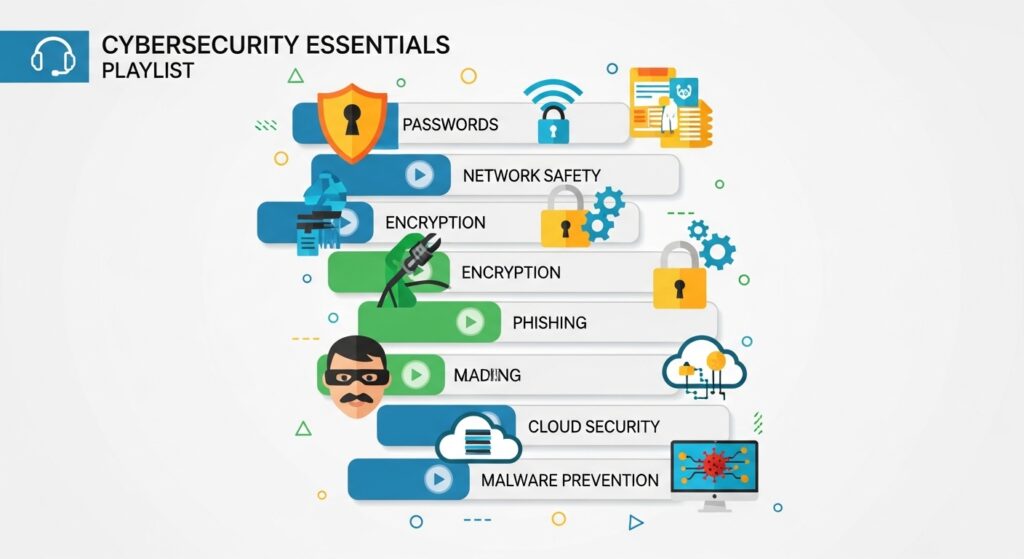
5. Key Topics Beginners Must Learn First
The best beginner cybersecurity videos focus on fundamentals, not advanced hacking.
Essential beginner topics include:
- Cybersecurity basics
- Types of cyber threats
- Password and identity security
- Network fundamentals
- Malware and phishing awareness
- Data protection basics
Strong foundations make advanced learning much easier later.
6. How Video-Based Learning Improves Retention
Watching cybersecurity concepts explained visually helps beginners understand faster.
Videos allow:
- Seeing attacks explained step by step
- Visual examples of threats
- Clear demonstrations instead of abstract theory
It’s like learning to cook by watching a recipe video instead of reading a dense manual.
7. Common Mistakes Beginners Make When Learning Cybersecurity
Many learners struggle not because of difficulty, but because of approach.
Common mistakes include:
- Jumping into advanced topics too early
- Relying only on theory
- Watching random videos without structure
- Ignoring practical examples
Pre-recorded beginner-focused courses usually avoid these pitfalls by following a clear roadmap.
8. What Makes a Cybersecurity Video Course Beginner-Friendly
Not all video courses are equal. A good beginner course should have:
- Simple language
- Short, focused lessons
- Real-life examples
- Clear progression from basics to intermediate
- No assumption of prior knowledge
If a course makes you feel confident instead of confused, it’s doing its job.
9. Comparing Free vs Paid Pre-Recorded Training
Free cybersecurity videos can be useful, but they often lack structure.
Free content pros:
- No cost
- Easy to access
Free content cons:
- Often outdated
- No clear learning path
- Limited support
Paid beginner courses usually offer:
- Structured curriculum
- Updated content
- Practical exercises
- Better learning continuity
The goal isn’t to spend more, it’s to learn better.
10. Certifications vs Skill-Based Learning
Many beginners ask: Should I focus on certifications or skills?
The honest answer: skills come first.
Pre-recorded video training helps you:
- Understand concepts
- Practice real scenarios
- Build confidence
Certifications make more sense once you have a solid foundation.
11. Learning at Your Own Pace: Why It Matters
Cybersecurity concepts don’t always click instantly.
Pre-recorded training allows you to:
- Rewatch difficult lessons
- Learn during free time
- Avoid burnout
This flexibility keeps beginners motivated instead of frustrated.
12. Real-World Skills vs Theory-Heavy Content
Cybersecurity is practical by nature. The best beginner videos focus on:
- How attacks happen
- How to prevent them
- What mistakes to avoid
For industry-recognized guidance on real-world application security risks, many learners refer to the OWASP Top 10, a globally trusted resource.
Understanding these risks helps beginners see how theory applies in practice.
13. How Safelora Helps Beginners Learn Cybersecurity
If you’re looking for beginner-focused, practical cybersecurity learning, Safelora is designed with simplicity in mind.
Safelora offers structured, pre-recorded cybersecurity training that:
- Explains concepts in plain language
- Focuses on real-world relevance
- Supports beginners and small teams
You can explore their cybersecurity learning resources here: Cybersecurity Essentials for Developers: Protect Your Code & Data
This makes Safelora a strong option for learners who want clarity without complexity.
14. Building a Cybersecurity Learning Routine
Consistency matters more than speed.
A simple routine could look like:
- 20–30 minutes per day
- One video lesson at a time
- Notes on key ideas
- Regular revision
Pre-recorded videos fit easily into daily life without stress.
15. Taking the Next Step After Beginner Training
Once you complete beginner training, you can:
- Explore intermediate topics
- Practice hands-on labs
- Prepare for certifications
- Apply skills at work
Pre-recorded beginner courses create the confidence needed to move forward.
Conclusion
The best pre-recorded cybersecurity training videos for beginners make learning feel possible, not intimidating. They replace confusion with clarity and pressure with progress.
By choosing structured, beginner-friendly video training, you give yourself the freedom to learn cybersecurity at your own pace, without sacrificing quality or relevance.
Whether your goal is career growth, skill development, or simply staying safe online, the right pre-recorded training can be your first strong step into cybersecurity.
Frequently Asked Questions (FAQs)
1. Are pre-recorded cybersecurity training videos good for complete beginners?
Yes, they are ideal because beginners can learn at their own pace and revisit lessons.
2. Do I need technical knowledge before starting cybersecurity videos?
No. Beginner-friendly courses start from the basics and explain everything clearly.
3. Are pre-recorded courses better than live cybersecurity classes?
For beginners, pre-recorded courses offer flexibility and less pressure, making learning easier.
4. Can I get a job after learning from pre-recorded cybersecurity videos?
They build foundational skills, which are essential before moving to advanced training or certifications.5. 5
5. How long does it take to complete beginner cybersecurity training?
Most beginners can complete foundational training within a few weeks with consistent learning.