

Industrial automation has transformed how factories, power plants, oil & gas facilities, water treatment plants, and manufacturing units operate. Machines now communicate with each other, processes are monitored remotely, and decisions are made automatically, often without human intervention.
But here’s the reality many beginners don’t realize: as automation increases, cyber risk increases too.
Cybersecurity for industrial automation is no longer just an IT issue. It’s an operational safety issue. A cyber incident in an automated environment doesn’t just steal data, it can stop production, damage equipment, disrupt supply chains, and even put lives at risk.
This beginner-friendly guide is written in simple English, with real-world examples and clear explanations. You don’t need an engineering or cybersecurity background to understand it. Think of industrial cybersecurity like locking the control room of a factory, if unauthorized people gain access, everything inside is at risk.
Let’s break it all down step by step.
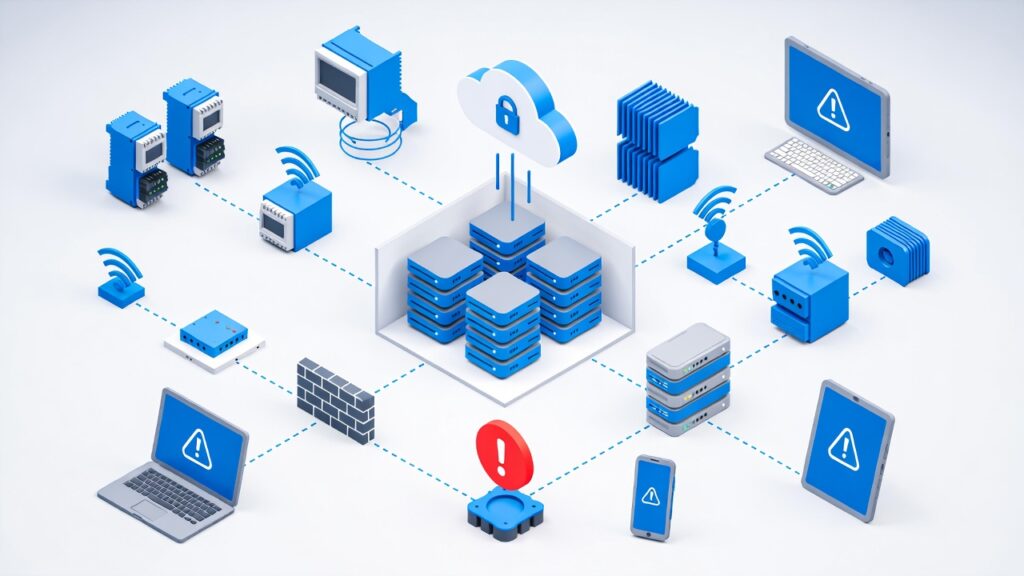
1. What Is Industrial Automation
Industrial automation refers to using control systems and machines to operate industrial processes with minimal human involvement.
Examples include:
- Automated manufacturing lines
- Robotic arms in factories
- Power grid control systems
- Oil and gas monitoring systems
- Smart water treatment plants
Automation improves speed, accuracy, and efficiency, but it also increases digital exposure.
2. Why Cybersecurity Matters in Industrial Automation
Unlike traditional office systems, industrial automation controls physical processes.
A cyberattack can:
- Shut down production lines
- Damage machinery
- Cause environmental harm
- Impact worker safety
- Lead to massive financial losses
Cybersecurity in industrial automation protects operations, people, and infrastructure, not just data.
3. IT vs OT: Understanding the Difference
One of the most important beginner concepts is the difference between IT and OT.
- IT (Information Technology)
Focuses on data, emails, servers, and business systems - OT (Operational Technology)
Controls machines, sensors, valves, motors, and physical processes
Industrial automation lives in the OT world, where downtime and errors have real-world consequences.
4. Who Needs Industrial Cybersecurity Knowledge
Cybersecurity for industrial automation is not just for specialists. It’s important for:
- Plant operators
- Maintenance engineers
- Automation technicians
- OT managers
- Industrial supervisors
- Business leaders in manufacturing
Even basic awareness can prevent major incidents.
Read related topic: Cybersecurity for AI Applications: Essential Training You Need
5. Common Cyber Threats in Industrial Environments
Industrial systems face both traditional and specialized cyber threats, including:
- Malware entering through USB devices
- Ransomware shutting down production
- Unauthorized remote access
- Compromised vendor credentials
- Network misconfigurations
Attackers often target the weakest link, which is usually lack of awareness.
6. Real-World Impacts of Industrial Cyber Attacks
Industrial cyber incidents don’t stay digital.
They can cause:
- Factory shutdowns lasting days or weeks
- Equipment damage costing millions
- Missed deliveries and penalties
- Safety incidents
- Loss of customer trust
This is why industrial cybersecurity is treated as critical infrastructure protection by governments worldwide.
7. Key Components of Industrial Automation Systems
To understand cybersecurity, beginners need to know the basic components:
- Sensors and actuators
- PLCs (Programmable Logic Controllers)
- HMIs (Human-Machine Interfaces)
- SCADA systems
- Industrial networks
Each component introduces potential security risks.
8. PLC, SCADA, and DCS Explained Simply
Let’s simplify the core systems:
- PLC – The “brain” controlling machines
- SCADA – The system that monitors and supervises operations
- DCS – Distributed control across large industrial environments
If attackers access these systems, they can control industrial processes remotely.
9. Why Legacy Systems Are at Risk
Many industrial environments rely on old systems designed decades ago, before cybersecurity was a concern.
Legacy systems often:
- Lack authentication
- Use outdated software
- Cannot be easily updated
- Were never meant to connect to the internet
Connecting them without protection is like connecting an old lock to a modern smart door.
10. Network Security for Industrial Automation
Industrial networks should never be wide open.
Beginner cybersecurity practices include:
- Network segmentation
- Firewalls between IT and OT
- Monitoring traffic
- Restricting access
Separating business networks from control networks is one of the most effective protections.
11. Remote Access and Vendor Security Risks
Remote access is convenient—but dangerous if unmanaged.
Risks include:
- Weak passwords
- Shared credentials
- Unsecured remote tools
- Third-party vendor access
Cybersecurity training teaches how to balance access and control safely.
12. Malware and Ransomware in OT Environments
Ransomware has increasingly targeted industrial facilities.
In OT environments:
- Systems can’t be easily rebooted
- Downtime is extremely costly
- Safety systems may be affected
Prevention through awareness and basic controls is far more effective than recovery.
13. Data Integrity and Operational Safety
In industrial automation, wrong data = wrong actions.
Cybersecurity helps ensure:
- Sensor data is accurate
- Control commands are not altered
- Systems behave as expected
Protecting data integrity protects physical safety.
14. Human Errors and Insider Risks
Most industrial cyber incidents involve human mistakes, such as:
- Plugging in infected USB drives
- Clicking phishing emails
- Sharing passwords
- Bypassing security controls
Beginner-friendly training focuses on reducing these everyday risks.
15. Beginner Cybersecurity Practices for OT Systems
Simple practices make a big difference:
- Strong access control
- Limited user permissions
- Regular backups
- Basic monitoring
- Awareness training
Cybersecurity doesn’t have to be complex to be effective.
16. Cybersecurity Training for Industrial Beginners
Beginner training for industrial automation focuses on:
- Understanding OT risks
- Recognizing common attack methods
- Safe daily behaviors
- Incident awareness
Many best practices align with guidance from trusted organizations like the Cybersecurity & Infrastructure Security Agency (CISA), a globally recognized authority on industrial and critical infrastructure security (external link).
17. How Safelora Supports Industrial Cybersecurity Learning
Platforms like Safelora provide beginner-friendly cybersecurity education that helps industrial professionals understand risks without technical overload.
Safelora focuses on:
- Practical cybersecurity awareness
- Real-world industrial scenarios
- Simple explanations
- Flexible online learning
This makes it easier for industrial teams to build security awareness from the ground up.
18. The Future of Cybersecurity in Industrial Automation
Industrial automation will continue to grow with:
- Smart factories
- IIoT devices
- AI-driven control systems
- Remote operations
As connectivity increases, cybersecurity awareness will become as important as mechanical safety training.
Conclusion
Cybersecurity for industrial automation is not just a technical topic, it’s a safety, reliability, and business continuity issue. Beginners don’t need advanced tools or deep technical knowledge to make a difference. Awareness, training, and simple security habits go a long way.
Just as factories invest in physical safety gear, they must invest in cyber safety awareness. Industrial systems are powerful, but only when they are secure.
Start with the basics, train consistently, and protect what keeps the world running.
Frequently Asked Questions (FAQs)
1. Is cybersecurity important for industrial automation beginners?
Yes. Basic awareness helps prevent serious operational and safety incidents.
2. What is the biggest cybersecurity risk in industrial environments?
Human error and unsecured access are among the biggest risks.
3. Do industrial systems really get targeted by cyberattacks?
Yes. Critical infrastructure is a major target for cybercriminals.
4. Can non-IT staff learn industrial cybersecurity?
Absolutely. Beginner training focuses on awareness and safe practices.
5. Is online training effective for industrial cybersecurity awareness?
Yes. Online beginner training is flexible and practical for industrial teams.