

Cybersecurity has become a daily necessity, not a luxury. Every email you open, link you click, app you install, or password you create carries a level of risk. Yet many people still believe cybersecurity is too technical, too complex, or too time-consuming to learn.
The truth is much simpler: you don’t need live classes, expensive coaching, or years of experience to start protecting yourself online. A pre-recorded cybersecurity course online for beginners can give you everything you need, flexibility, clarity, and real-world safety skills.
Think of pre-recorded cybersecurity courses like on-demand fitness workouts. You don’t need a personal trainer standing next to you. You press play, learn at your pace, pause when needed, and repeat lessons until things click. That’s exactly how beginners learn cybersecurity best.
This guide is written for complete beginners and non-technical users. We’ll explain what pre-recorded cybersecurity courses are, why they work so well, what beginners should learn, how to choose the best course, and why platforms like Safelora are ideal for first-time learners.
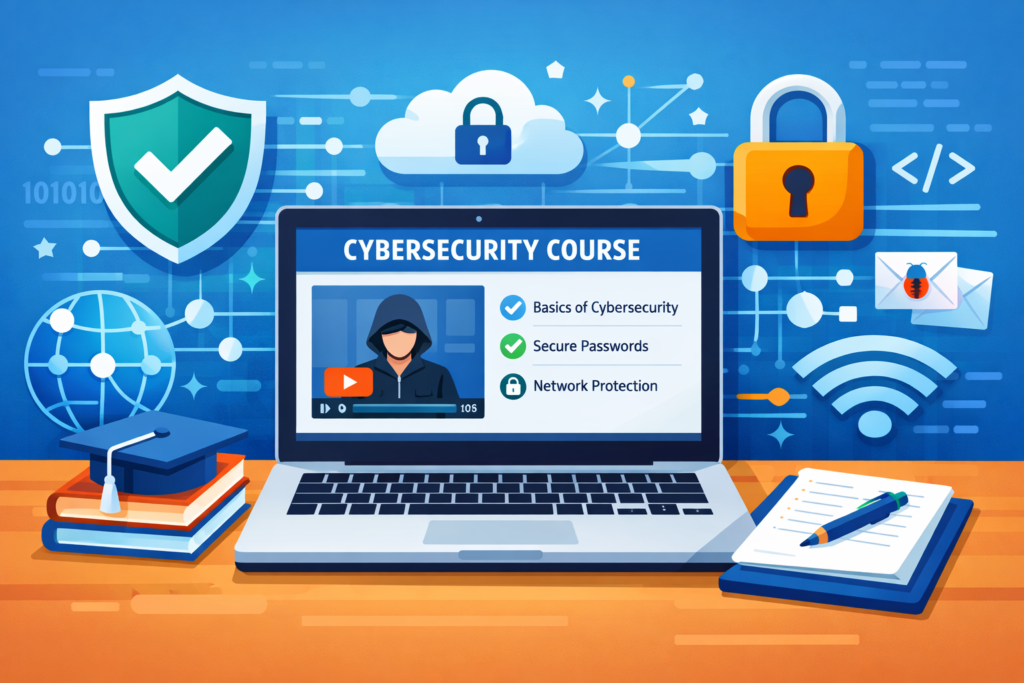
1. What Is a Pre-Recorded Cybersecurity Course
A pre-recorded cybersecurity course is an online learning program made up of videos and lessons that are recorded in advance. Instead of attending live classes, learners access the content anytime, from anywhere.
These courses usually include:
- Short video lessons
- Simple explanations
- Real-life examples
- Quizzes or summaries
- Step-by-step guidance
For beginners, pre-recorded courses remove pressure and allow learning in a comfortable, stress-free way.
2. Why Pre-Recorded Courses Are Ideal for Beginners
Beginners often feel overwhelmed when learning something new. Pre-recorded courses solve this by offering:
- Flexibility – learn anytime
- Control – pause, rewind, replay
- No pressure – no live audience
- Consistency – structured learning path
It’s like learning to cook by following video recipes instead of attending a crowded cooking class.
3. Who Should Take a Pre-Recorded Cybersecurity Course
These courses are perfect for:
- Students from any background
- Working professionals
- Freelancers and remote workers
- Small business owners
- Parents and seniors
- Anyone new to cybersecurity
If you use the internet daily, this type of course is designed for you.
4. What Beginners Really Need to Learn
Beginners don’t need advanced hacking skills. What they need is awareness and habits.
A good beginner cybersecurity course focuses on:
- Understanding online threats
- Safe digital behavior
- Protecting accounts and devices
- Avoiding scams and fraud
These basics cover most real-world risks.
5. Common Cyber Threats Explained Simply
Cyber threats sound scary, but they’re easier to understand than you think:
- Malware – harmful software that damages devices
- Viruses – programs that spread and slow systems
- Phishing – fake emails or messages
- Ransomware – attacks that lock files for money
Pre-recorded courses explain these using examples beginners already recognize.
6. Password Security: The First Essential Lesson
Password mistakes are the most common cause of cyber incidents.
Beginner courses teach:
- How to create strong passwords
- Why password reuse is risky
- How password managers work
- Why two-factor authentication matters
Strong passwords are like strong locks, simple but powerful.
7. Email, Phishing, and Scam Awareness
Most cyber attacks start with an email.
Pre-recorded lessons show beginners:
- How phishing emails look
- Why urgent messages are dangerous
- How attackers impersonate trusted brands
- How to verify suspicious requests
Once you know the signs, scams become much easier to spot.
8. Safe Internet Browsing for Beginners
Not every website is safe, even if it looks professional.
Courses teach:
- How to recognize secure websites
- Why “https” matters
- How fake websites copy real ones
- Why pop-ups and downloads are risky
Safe browsing is like reading warning signs on the road.
9. Mobile and Device Security Basics
Smartphones and laptops hold sensitive data.
Beginner cybersecurity courses explain:
- Device updates and why they matter
- Screen locks and encryption
- App permissions
- Fake apps and mobile scams
Protecting devices is protecting your entire digital life.
10. Wi-Fi and Remote Access Safety
Public Wi-Fi is convenient—but risky.
Pre-recorded lessons cover:
- Dangers of open Wi-Fi
- How to secure home networks
- Basic VPN concepts
- Safe remote work habits
Using unsafe Wi-Fi is like leaving your front door open.
Read our topic on Short Cybersecurity Training Modules for Busy Professionals.
11. Online Privacy and Personal Data Protection
Your personal data has value, even when you think it doesn’t.
Beginner courses teach:
- How companies collect data
- Tracking and cookies
- Privacy settings on social platforms
- Safe sharing habits
Many courses follow best practices recommended by trusted organizations such as the Cybersecurity & Infrastructure Security Agency (CISA), a reliable external authority on cybersecurity.
12. How Pre-Recorded Cybersecurity Courses Are Structured
Most courses follow a clear structure:
- Introduction to cybersecurity
- Threat awareness
- Practical protection steps
- Real-world examples
- Final review or certificate
This structure helps beginners build confidence step by step.
13. Advantages of Learning at Your Own Pace
Self-paced learning offers major benefits:
- Less stress
- Better understanding
- Flexible scheduling
- Higher completion rates
You control the speed, fast or slow, whatever suits you.
14. How to Choose the Best Cybersecurity Course Online
When choosing a pre-recorded cybersecurity course, look for:
- Beginner-focused content
- Simple language
- Updated information
- Practical examples
- Mobile and desktop access
Avoid courses that are overly technical or outdated.
15. Mistakes Beginners Should Avoid
Common beginner mistakes include:
- Choosing advanced courses too early
- Skipping fundamentals
- Ignoring real-world examples
- Not applying what they learn
Start simple. Build a strong foundation first.
16. Why Pre-Recorded Learning Builds Confidence
Confidence comes from repetition and understanding.
Pre-recorded courses allow you to:
- Rewatch difficult lessons
- Learn without embarrassment
- Practice at your own pace
- Build habits gradually
Confidence is key to staying safe online.
17. How Safelora Supports Beginner Cybersecurity Learning
Platforms like Safelora focus on pre-recorded cybersecurity courses designed specifically for beginners (internal link).
Safelora emphasizes:
- Clear, beginner-friendly lessons
- Practical cybersecurity habits
- Flexible online access
- Real-world safety skills
This makes it an excellent choice for first-time learners.
18. The Future of Online Cybersecurity Education
Cybersecurity education is moving toward:
- On-demand learning
- Short, focused lessons
- Beginner-first design
- Real-life application
Pre-recorded courses will continue to lead the way.
Conclusion
Choosing the best pre-recorded cybersecurity course online for beginners is one of the smartest steps you can take to protect your digital life. You don’t need technical expertise, live classrooms, or long study hours, just the right course and the willingness to learn.
Cybersecurity is no longer just for IT professionals. It’s for everyone who uses the internet—and that means you.
Start learning today, move at your own pace, and stay safe online.
Frequently Asked Questions (FAQs)
1. Are pre-recorded cybersecurity courses good for beginners?
Yes. They are flexible, simple, and designed for non-technical learners.
2. Do I need technical skills before starting a cybersecurity course?
No. Beginner courses require no prior technical knowledge.
3. How long does it take to complete a pre-recorded course?
It depends on the course, but most can be completed in days or weeks.
4. Can pre-recorded courses really help prevent cyber attacks?
Yes. Awareness and good habits significantly reduce cyber risks.
5. Is online cybersecurity learning effective without live instructors?
Absolutely. Self-paced learning often improves understanding and retention.