

Modern professionals are busier than ever. Between meetings, deadlines, emails, family responsibilities, and constant notifications, finding time to learn new skills can feel impossible. Yet at the same time, cyber threats are growing rapidly, and busy professionals are one of the biggest targets.
Here’s the good news: you don’t need months of study or deep technical knowledge to protect yourself. Short cybersecurity training modules are designed specifically for people with limited time who still want to stay safe online.
Think of these modules like healthy snacks instead of full meals. You don’t always have time for a three-course dinner, but a nutritious snack can still keep you going. In the same way, short cybersecurity lessons deliver high-impact knowledge in small, manageable pieces.
This guide explains what short cybersecurity training modules are, why they matter for professionals, how they work, and how platforms like Safelora make cybersecurity learning fast, practical, and effective.
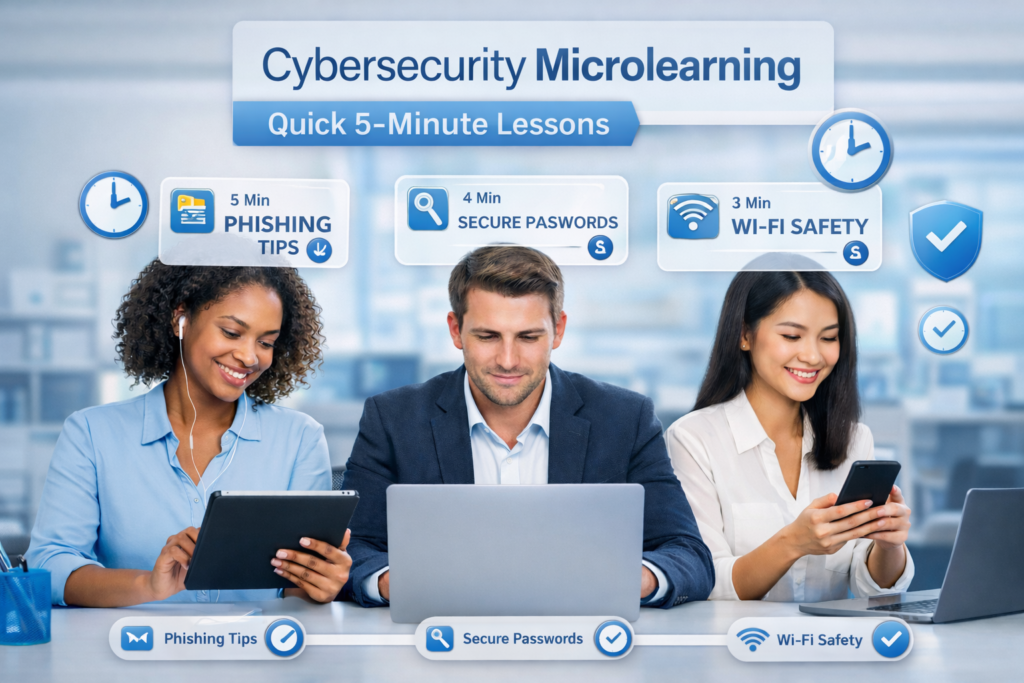
1. Why Busy Professionals Need Cybersecurity Training
Busy professionals handle sensitive information every day, client data, company emails, financial records, and login credentials. One mistake can lead to serious consequences.
Cybercriminals target professionals because they:
- Move fast
- Multitask constantly
- Trust familiar tools
- Have access to valuable data
Cybersecurity training helps professionals slow down at the right moments and avoid costly errors.
2. What Are Short Cybersecurity Training Modules
Short cybersecurity training modules are bite-sized lessons designed to be completed in 5–15 minutes. Each module focuses on one specific topic or risk.
Instead of long lectures, they provide:
- Clear explanations
- Real-world examples
- Actionable tips
- Immediate takeaways
They are perfect for coffee breaks, lunch hours, or short gaps between meetings.
3. Why Traditional Training Fails Busy People
Traditional cybersecurity training often fails because it is:
- Too long
- Too technical
- Hard to schedule
- Overwhelming
Busy professionals don’t need deep theory, they need practical guidance they can apply today. Short modules respect time constraints while still delivering value.
4. Key Cyber Risks Faced by Professionals
Professionals face unique cybersecurity risks, including:
- Phishing emails disguised as work messages
- Fake meeting invites
- Cloud account breaches
- Weak passwords reused across platforms
- Insecure remote work setups
Short training modules focus on real threats professionals encounter daily.
5. How Short Modules Fit Into a Busy Schedule
Short cybersecurity modules are designed for flexibility:
- Learn one topic at a time
- Pause and resume anytime
- No pressure to complete long sessions
- Learn on desktop or mobile
It’s like doing five-minute stretches instead of a full workout, still effective, still beneficial.
6. Core Topics Covered in Short Cybersecurity Modules
Most short modules cover essential areas such as:
- Cyber threat awareness
- Password security
- Email safety
- Device protection
- Data privacy
- Remote work security
Each topic is broken into small, focused lessons.
7. Email and Phishing Awareness for Professionals
Email is the number one attack method used against professionals.
Short modules teach:
- How to spot fake emails
- How attackers mimic colleagues and clients
- Why urgency is a red flag
- Safe ways to verify requests
A single phishing email can cost companies millions, awareness is your first defense.
8. Password and Account Security in Minutes
Password security doesn’t require hours of training.
In just a few minutes, professionals learn:
- How to create strong passwords
- Why password reuse is dangerous
- How password managers help
- Why two-factor authentication is essential
These small changes dramatically reduce risk.
Explore our topic on Basic Cybersecurity Training for Beginners: Learn Fast & Stay Safe.
9. Device Security for Work and Personal Use
Professionals often use the same devices for work and personal tasks.
Short modules explain:
- Importance of system updates
- Antivirus basics
- Screen locks and encryption
- Safe use of USB devices
Device security is like wearing a seatbelt, simple, automatic, and lifesaving.
10. Safe Remote Work and Wi-Fi Practices
Remote work increases flexibility, but also risk.
Training modules cover:
- Public Wi-Fi dangers
- Home router security
- VPN basics
- Secure video meetings
Using unsafe Wi-Fi is like working with confidential files in a public café, training helps prevent that.
11. Data Privacy and Confidential Information
Professionals handle confidential data daily.
Short modules teach:
- How data leaks happen
- Safe file sharing
- Cloud storage best practices
- Privacy awareness
These lessons often align with guidance from trusted organizations such as the Cybersecurity & Infrastructure Security Agency (CISA), a globally respected external cybersecurity authority.
12. Mobile Security for Professionals on the Move
Smartphones are powerful, and vulnerable.
Cybersecurity modules explain:
- App permission risks
- SMS scams
- Mobile phishing
- Secure phone settings
Mobile security is critical for professionals who work on the go.
13. Microlearning: Why Short Training Works
Short cybersecurity training uses microlearning, which means:
- Small lessons
- Focused objectives
- Better retention
- Less mental fatigue
Studies show people remember more when learning is broken into smaller pieces.
14. How Online Cybersecurity Modules Are Delivered
Online short modules typically include:
- Short videos
- Simple visuals
- Practical examples
- Quick quizzes
- Clear action steps
You learn what you need, nothing extra.
15. Benefits of Short Cybersecurity Training
Key benefits for busy professionals include:
- Minimal time commitment
- Immediate real-world application
- Reduced risk of cyber incidents
- Increased confidence
- Better compliance with security policies
Cybersecurity becomes a habit, not a burden.
16. Choosing the Right Cybersecurity Modules
When selecting short training modules, look for:
- Professional-focused content
- Clear, simple language
- Updated threats and examples
- Mobile-friendly access
- Practical guidance
Avoid overly technical or outdated material.
17. How Safelora Supports Busy Professionals
Platforms like Safelora are designed to deliver short, effective cybersecurity training modules for busy professionals (internal link).
Safelora focuses on:
- Beginner and professional-friendly content
- Time-efficient lessons
- Practical, real-world security
- Easy online access anytime
This makes cybersecurity learning realistic, even for packed schedules.
18. The Future of Cybersecurity Learning for Professionals
The future of learning is short, flexible, and relevant.
As cyber threats grow:
- Professionals will need continuous learning
- Long training sessions will fade
- Short, targeted modules will dominate
Cybersecurity will become part of daily professional life, just like email or meetings.
Conclusion
Short cybersecurity training modules for busy professionals are the smart solution for today’s fast-paced world. You don’t need long courses or technical skills, just focused, practical learning that fits your schedule.
Cybersecurity is no longer optional. With just a few minutes a day, you can dramatically reduce risk, protect sensitive information, and work with confidence.
Stay busy, but stay safe.
Frequently Asked Questions (FAQs)
1. Are short cybersecurity training modules effective for professionals?
Yes. Short, focused lessons improve awareness and reduce real-world risks.
2. How long does one cybersecurity module usually take?
Most modules take between 5 and 15 minutes.
3. Do professionals need technical knowledge for these modules?
No. Modules are designed for non-technical users.
4. Can short cybersecurity training prevent workplace cyber incidents?
Yes. Awareness significantly lowers the chance of mistakes and breaches.
5. Is online cybersecurity training suitable for remote professionals?
Absolutely. Online modules are ideal for remote and hybrid work environments.